
New 1099-DA reporting rules
The landscape of cryptocurrency taxation is undergoing a fundamental structural shift as the 2026 tax year approaches. The Internal Revenue Service is replacing fragmented reporting mechanisms with a unified Form 1099-DA, designed to capture digital asset transactions with unprecedented granularity. This new form moves beyond the limited scope of previous exchange-only reporting, mandating detailed disclosures that include cost basis, holding periods, and transaction types for every digital asset trade. For investors relying on self-tracking or fragmented exchange statements, this change eliminates the possibility of overlooking transactions, as the reporting burden shifts significantly toward comprehensive data availability.
This regulatory overhaul directly impacts how tax lots are calculated and reported. Previously, many investors could rely on exchange-generated cost basis reports that often missed complex DeFi interactions, airdrops, or peer-to-peer transfers. Under the new 1099-DA framework, the IRS expects a complete picture of digital asset movement, regardless of where the transaction occurred. This means that strategies like FIFO (First-In, First-Out) or LIFO (Last-In, First-Out) must be meticulously maintained across all platforms and wallets to ensure accurate cost basis attribution.
The stakes for compliance have never been higher. Failure to accurately report these transactions can result in significant penalties, interest accruals, and increased audit risk. Investors must transition from reactive tracking to proactive, year-round record-keeping. This includes documenting the fair market value of tokens received through airdrops or staking at the time of receipt, as these are considered taxable income. The new rules demand a level of precision and organization that was previously optional but is now mandatory for lawful compliance.
FIFO versus LIFO cost basis
The method you select to identify which tokens are sold first determines your tax liability. For DeFi users executing high-frequency trades across liquidity pools, this choice is not merely an accounting preference; it is a regulatory constraint with immediate financial consequences. The Internal Revenue Service (IRS) treats cryptocurrency as property, meaning every swap, stake, or bridge transaction creates a taxable event. Without a consistent cost basis method, your filings will lack the audit trail required to defend your position against scrutiny.
First-In, First-Out (FIFO)
FIFO is the default method prescribed by the IRS for most taxpayers. Under this rule, the tokens you acquired earliest are the ones considered sold first. This approach is transparent and difficult to dispute because it relies on the chronological order of acquisition. However, in a bull market, older tokens typically have a lower cost basis than current market prices. Selling these early acquisitions often results in higher short-term or long-term capital gains, increasing your immediate tax bill.
Last-In, First-Out (LIFO)
LIFO assumes that the most recently acquired tokens are the ones disposed of first. This method can be advantageous in rising markets because newer tokens usually have a higher cost basis, closer to the current sale price. A higher cost basis reduces the calculated gain, thereby lowering the tax owed. However, LIFO is complex to track in DeFi environments where tokens are frequently restaked, bridged, or compounded. Maintaining accurate records of every "last in" lot across multiple protocols requires rigorous bookkeeping and specialized software.
Comparative Impact on Capital Gains
The difference between FIFO and LIFO becomes stark when analyzing the impact on short-term versus long-term gains. Short-term gains (assets held one year or less) are taxed at ordinary income rates, which are significantly higher than long-term capital gains rates. Choosing LIFO may defer taxes by reducing short-term gains, but it leaves older, low-cost assets in your portfolio. These retained assets will eventually be sold, potentially triggering large long-term gains later. FIFO, by contrast, realizes gains earlier but provides a clearer, more defensible record of transaction history.
| Method | IRS Default | Tax Impact | Record Keeping |
|---|---|---|---|
| FIFO | Yes | Higher gains in bull markets | Low |
| LIFO | No | Lower gains in bull markets | High |
Specific identification for complex yields
Specific Identification (Spec ID) is the only method capable of handling the fragmentation inherent in modern DeFi strategies. When you provide liquidity, farm yields, or receive airdrops, your position is not a single asset but a collection of distinct lots with different cost bases, acquisition dates, and tax character. Generic averaging methods obscure these differences, often resulting in inaccurate capital gains calculations and unnecessary tax liability.
Consider a liquidity provision scenario. You deposit ETH into a pool and receive LP tokens. Each time the pool pays out fees or you rebalance, you are effectively acquiring new "shares" of the position at varying prices. If you later withdraw, you must determine which specific shares you are selling. Spec ID allows you to match the exact lot to the transaction, preserving the correct holding period (short-term vs. long-term) and basis.
This precision is critical for airdrops and forks, which are taxable as ordinary income at receipt. Without Spec ID, tracking the basis of these free tokens against future sales becomes nearly impossible. You risk misreporting income or losing the ability to claim losses on failed projects. The IRS requires clear records of each lot's origin. Spec ID provides the audit trail necessary to defend your positions during an examination.
The complexity of these transactions demands specialized tracking. While standard exchanges may offer basic reports, they rarely break down the internal mechanics of DeFi interactions. You must manually or algorithmically assign specific IDs to each yield event, airdrop, and rebalance. This granular approach ensures that every gain or loss is reported according to the actual economic reality of the trade, not an averaged approximation.
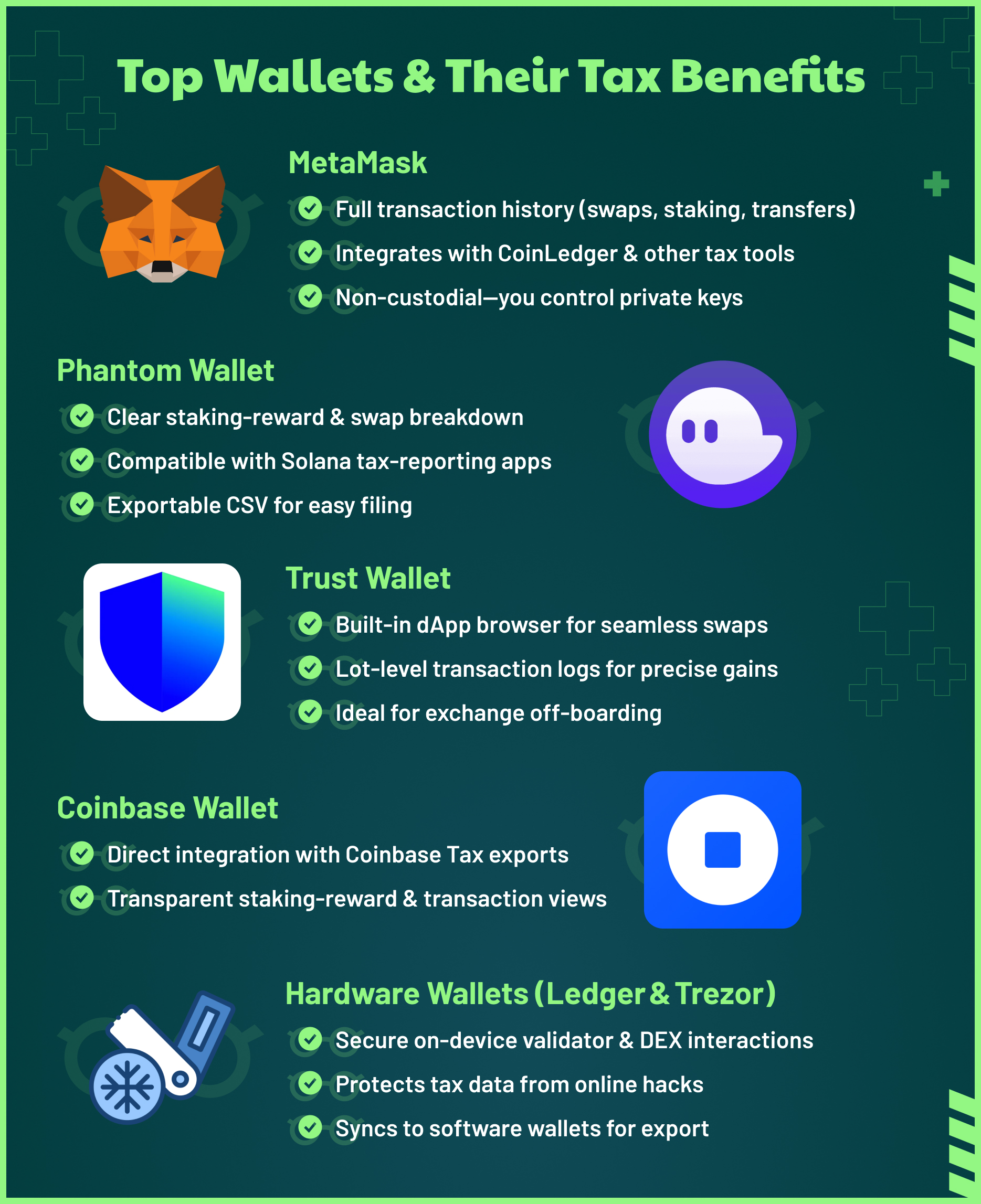
Tracking tools for onchain compliance
Selecting the right software is not a convenience; it is a legal necessity. The IRS has explicitly stated that it will accept crypto tax software-generated reports, but the burden of accuracy remains entirely on the taxpayer. If the tool fails to reconcile your onchain activity with the tax lot method you selected, the resulting forms will be incorrect. In a high-stakes audit, an incorrect Form 8949 is not a simple math error—it is a potential penalty trigger.
DeFi transactions create massive data volumes that standard exchange exports cannot handle. You need a provider-backed aggregator that can ingest raw transaction hashes from multiple chains and apply your chosen lot identification method—FIFO, LIFO, or Specific ID—consistently. Without this automation, manual tracking is prone to human error, and the IRS does not accept "I tried my best" as a defense. The tool must distinguish between a swap, a liquidity provision event, and a yield distribution, as each carries different tax implications.
The market volatility of assets like Bitcoin and Ethereum means that valuation timing is critical. A tool that pulls prices from a single, potentially manipulated source can skew your cost basis. Ensure the software uses provider-backed data feeds to anchor your valuations at the exact moment of the transaction. This protects your cost basis calculations against price spikes or slippage that might occur during complex DeFi interactions.

Compliance also requires more than just calculating gains; it requires generating the specific IRS forms required for your situation. The software must output Form 8949 and Schedule D entries that match the IRS's expected format. If the software cannot produce these documents in a way that an accountant can review and sign off on, it is not fit for purpose. The goal is to create a defensible audit trail that links every onchain transaction to a specific tax lot and valuation source.
| Feature | Basic Tracker | Compliance Suite |
|---|---|---|
| IRS Form 8949 Export | No | Yes |
| Multi-Chain Ingestion | Limited | Full |
| Lot Method Consistency | Manual | Automated |
Prepare Your DeFi Tax Lots for 2026
The 2026 filing season introduces new IRS Form 1099-DA reporting requirements, creating a complex landscape for digital asset investors. Preparing your tax lots now prevents costly errors and ensures compliance with updated cost basis rules. Treat this process as a legal audit of your digital footprint.
Download complete CSV exports from every wallet and exchange you used. Include all DeFi interactions, staking rewards, and airdrops. MetaMask and other providers are aligning with new reporting standards, so verify your data matches upcoming 1099-DA forms.

Choose and document your lot selection method: FIFO, LIFO, or Specific ID. Consistency is critical for IRS compliance. If you switch methods, you must file Form 3115 to request a change, which adds administrative burden and potential scrutiny.
Flag all staking rewards, yield farming returns, and airdrops received. These are taxable as ordinary income at their fair market value on the day received. Missing even small amounts can trigger audits, as digital asset tax experts warn the 2026 season will be a "minefield" for incomplete filings.

Match each disposition against its corresponding acquisition lot. Use your chosen cost basis method to determine capital gains or losses. Separate short-term (held under one year) from long-term (held over one year) transactions, as they are taxed at different rates.

Compare your calculated totals against any 1099-DA forms received from exchanges. Discrepancies must be resolved before filing. The new form aims to reduce reporting gaps, so ensure your internal records match the exchange data exactly.
Failure to report digital asset transactions accurately can result in significant penalties. The IRS has increased enforcement resources for crypto tax compliance. Ensure all data is verified and documented before submission.
No comments yet. Be the first to share your thoughts!