
New IRS rules for DeFi tax lots 2026
The 2026 tax season marks a structural shift in how the Internal Revenue Service treats decentralized finance. While the proposed DeFi Broker Rule was repealed in the recent omnibus spending bill, the regulatory pressure on digital asset reporting has not diminished. Instead, the IRS has finalized Form 1099-DA, a new reporting mechanism that requires brokers and certain decentralized exchanges to disclose gross proceeds from digital asset transactions. This change eliminates the "wild west" ambiguity that previously allowed many DeFi participants to operate without full cost basis tracking.
For liquidity providers and active traders, the most significant change is the tightening of lot-selection relief. The IRS has extended temporary relief allowing taxpayers to use First-In, First-Out (FIFO) accounting for digital assets, but this relief is now scheduled to expire at the end of 2026. Without this extension, the default FIFO method will apply strictly, potentially triggering higher taxable gains on early-acquired assets even if you are selling newer, higher-cost tokens. Accurate DeFi tax lots tracking is no longer optional; it is a compliance necessity to avoid overpaying taxes due to automated FIFO calculations.
The concept of "dominion and control" remains central to IRS enforcement. Even if a transaction occurs on a non-custodial wallet, the IRS views the user as the primary taxpayer responsible for reporting. The new Form 1099-DA creates a paper trail that the IRS will cross-reference against individual returns. Discrepancies between your reported cost basis and the gross proceeds reported by exchanges can trigger audits. Therefore, maintaining precise records of each liquidity pool deposit, withdrawal, and impermanent loss event is critical for defending your tax position.
Tracking liquidity pool tax reporting
Taxing liquidity pool participation requires treating LP tokens as distinct property rather than a mere receipt for deposited assets. When you provide liquidity to a decentralized exchange, you are exchanging one asset for another, which triggers a taxable event. The IRS views this swap as a disposal of your original tokens, meaning you must calculate the gain or loss on the initial deposit based on the fair market value at the time of the transaction. This establishes your cost basis in the new LP tokens, a figure that will be critical when you eventually exit the pool.
It is essential to understand that LP tokens themselves are taxable property. As long as you hold these tokens in your wallet, you maintain dominion and control over the underlying assets in the pool. Any yield generated through trading fees or rewards is generally considered ordinary income at the time you receive it, based on the fair market value when the tokens become transferable or reportable. This income event is separate from the capital gains or losses realized when you eventually withdraw your liquidity.
The final taxable event occurs upon withdrawal. When you remove your liquidity, you are effectively selling your LP tokens back to the market. The difference between the proceeds from this sale and your established cost basis determines your capital gain or loss. Because liquidity pools often involve volatile assets, the value of your withdrawal may differ significantly from your initial deposit, making accurate record-keeping of every swap and yield distribution imperative for compliant tax reporting.
Impermanent loss tax deduction strategies
Impermanent loss (IL) represents a reduction in the value of your assets within a liquidity pool relative to simply holding them. For tax purposes, this unrealized loss is not a deductible event. The IRS views the liquidity position as an ongoing investment where you retain dominion and control over the underlying tokens. As long as the position remains open, the discrepancy between your pool value and your initial cost basis is considered unrealized, meaning no tax liability or deduction is triggered.
To claim a deduction, you must realize the loss by closing the position. This occurs when you remove your liquidity from the pool, effectively selling the tokens back into a stablecoin or base asset. At that moment, the transaction becomes a taxable event. You must compare the proceeds from the sale against your adjusted cost basis to determine the final capital gain or loss. If the sale proceeds are lower than your cost basis, you may claim a capital loss on your tax return.
Calculating the adjusted cost basis requires precise tracking of every deposit into the pool. Your cost basis is generally the fair market value of the tokens at the time of the initial deposit. When you withdraw, the IRS treats the removal of liquidity as a sale of the proportional share of tokens. You must allocate your original cost basis across the tokens withdrawn to calculate the exact loss.
Accurate record-keeping is essential for substantiating these calculations. Maintain detailed logs of deposit dates, token values, and withdrawal transactions. This documentation supports your adjusted cost basis and ensures compliance with IRS reporting standards for complex DeFi activities.
DeFi capital gains tracking tools
Automating the tracking of liquidity pool positions and impermanent loss requires specialized software capable of parsing complex on-chain data. Standard portfolio trackers often fail to distinguish between LP token minting, yield accrual, and token swaps, leading to inaccurate cost basis calculations and potential IRS discrepancies.
The following comparison evaluates leading DeFi tax software based on their ability to handle liquidity pool interactions, calculate impermanent loss for tax purposes, and generate compliant IRS forms. Selecting a tool that correctly identifies "dominion and control" events is critical for accurate reporting.
| Provider | LP Data Parsing | IL Tax Impact | IRS Form Generation |
|---|---|---|---|
| Koinly | Comprehensive | Detailed | 1040, Schedule D |
| ZenLedger | Full EVM & Solana | Included | 1040, Schedule 1 |
| CoinTracking | Multi-chain | Basic | 1040, Schedule D |
| TokenTax | Advanced | Detailed | 1040, Schedule D |
Each provider offers distinct advantages for high-volume DeFi users. Koinly and ZenLedger are frequently cited for their robust handling of complex DeFi protocols, including automated liquidity provision and yield farming. Ensure your chosen tool supports the specific blockchains and protocols you utilize to avoid missing taxable events.
DeFi Tax Compliance Checklist
Accurate DeFi tax lots 2026 filings require a systematic reconciliation of on-chain activity with your cost basis records. The IRS’s new Form 1099-DA reporting framework demands precise documentation of every taxable event, including swaps, liquidity provision, and impermanent loss adjustments. Without a rigorous workflow, you risk significant penalties for underreported income or incorrect cost basis calculations.

Connect all active wallets and DeFi protocols to a specialized tax software. Ensure the tool supports major liquidity pool protocols and can ingest historical transaction data from the start of your activity. This step captures the raw data needed to identify every potential taxable event.
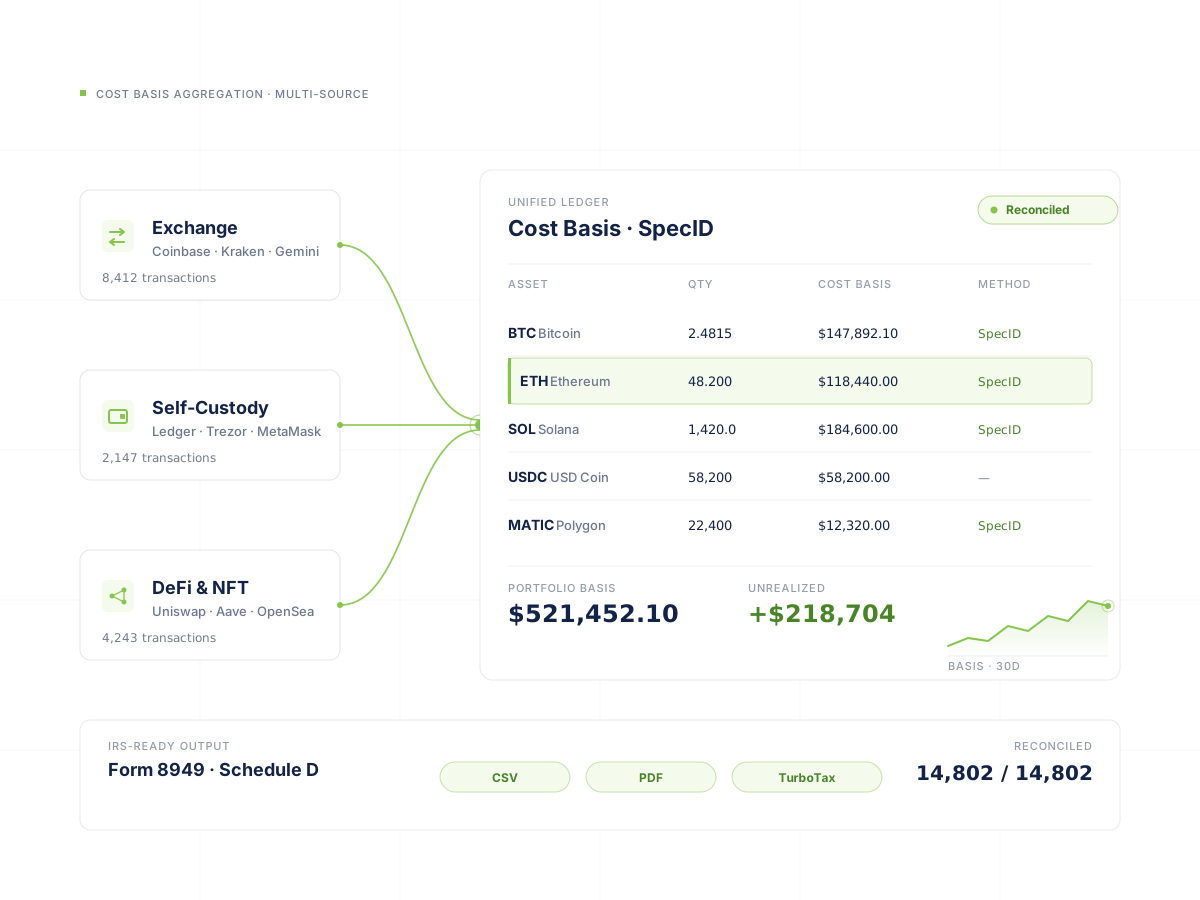
Verify that your software correctly assigns cost basis to each lot using your chosen method (FIFO, HIFO, or Specific Identification). Cross-reference internal wallet balances with external exchange statements to identify any missing transactions or discrepancies in token quantities.
Review liquidity pool interactions specifically. Adding liquidity is generally not a taxable event, but removing it is. You must calculate the cost basis of the tokens withdrawn and compare it to their fair market value at the time of withdrawal to determine any capital gains or losses.
Document any impermanent loss adjustments if your jurisdiction or specific tax strategy allows for basis adjustments. While the IRS generally treats impermanent loss as a non-event until realization, accurate tracking ensures your final cost basis reflects the true economic outcome of your liquidity provision.

Generate your tax report and perform a final manual review of high-value transactions. Ensure all income from staking, yield farming, or airdrops is included. Export the final data in a format compatible with your tax filing software, retaining all supporting documentation for at least three years.
This workflow ensures your DeFi tax lots 2026 filings are audit-proof and compliant with current IRS guidance. For the latest regulatory updates, refer to official IRS publications on digital asset reporting.
No comments yet. Be the first to share your thoughts!