
Why DeFi tax lots matter in 2026
The landscape of crypto taxation has shifted dramatically. With the repeal of the DeFi broker rule in April 2025, the safety net of centralized exchanges issuing Form 1099-DA for all transactions is gone. While CEXs now report your activity, DeFi protocols do not. You are solely responsible for tracking every transaction across every chain you touch.
This repeal means that if you provide liquidity, stake assets, or swap tokens on-chain, the IRS has no broker to report your gains to. Instead, the agency relies on advanced blockchain analytics to identify wallets and match them to your identity. Your gains are not invisible; they are public records waiting to be scrutinized.
Without detailed tax lot tracking, you cannot accurately calculate your cost basis. This leads to either overpaying taxes or, more dangerously, underreporting and triggering audits. In 2026, self-reporting is not just a best practice—it is a legal requirement. You must maintain a precise ledger of every acquisition and disposal to prove your compliance.
Gather Onchain Transaction Data
The IRS does not receive a Form 1099 for your DeFi activity. While centralized exchanges report trades, decentralized protocols do not. Your on-chain activity is public, but it is unstructured. Missing a single swap in a liquidity pool can trigger an audit or result in penalties for underreporting income. You must manually reconstruct your cost basis by exporting raw transaction data.

Navigate to a reputable block explorer like Etherscan, Solana Explorer, or Arbitrum Explorer. Paste your public wallet address into the search bar. This reveals every transaction your wallet has initiated or received across the network. Do not rely on third-party portfolio trackers for the initial export, as they often fail to index obscure DeFi interactions or failed transactions that still incur gas fees.
Block explorers display every interaction, including approvals and contract deployments. Filter the results to show only "Token Transfers" and "Internal Txns." Look for incoming assets that do not match your known deposits; these are likely airdrops, staking rewards, or liquidity pool yields. Each of these events is a taxable event that must be recorded with its fair market value at the time of receipt.

Use the block explorer's export function to download your transaction history as a CSV file. Ensure you capture the timestamp, transaction hash, sender, recipient, and token amounts. This raw data is the foundation of your DeFi tax lots. Import this CSV into your tax software or spreadsheet to begin calculating cost basis for each asset you hold or have disposed of.

Cross-check the number of rows in your exported CSV against the total transaction count displayed on the block explorer. If the numbers do not match, your export is incomplete. Missing transactions mean missing cost basis data, which can lead to inflated capital gains calculations when you eventually sell those assets. Re-export with adjusted filters if necessary to ensure completeness.
Once you have a complete CSV export, you can proceed to categorize each transaction. The next step is to identify which transactions constitute a taxable event, such as a swap, a sale, or a receipt of new tokens. Accurate tracking of these lots is the only way to minimize your tax liability legally.
Assign Cost Basis to Each Lot
DeFi protocols do not issue tax forms. While centralized exchanges report activity via Form 1099-DA, DeFi transactions remain your sole responsibility. The IRS can trace every interaction on public blockchains, regardless of whether a protocol reports to the government. You must calculate the cost basis for every token lot to determine accurate capital gains or losses.
The cost basis is the total value you paid to acquire an asset. It includes the fair market value of the tokens at the exact time of the transaction. Crucially, it also includes any gas fees paid to execute the swap or transfer. The IRS treats these network fees as part of the acquisition cost, not as separate deductible expenses.
Gas fees paid to acquire an asset are added to its cost basis. Do not deduct them as separate expenses.
To track this accurately, follow these steps for every DeFi interaction:
Failure to include gas fees or accurate timestamps creates a discrepancy in your records. Since the IRS has access to blockchain data, they can reconstruct your activity. Inaccurate cost basis calculations can lead to overpaying taxes or, worse, penalties for underreporting. Maintain precise records for every lot to protect yourself from audits.
Choose a tax lot identification method
DeFi protocols do not issue tax forms like centralized exchanges. While central platforms report via Form 1099-DA, your self-custody wallets and cross-chain swaps leave no automated trail for the IRS. You are solely responsible for proving your cost basis. Choosing the wrong identification method can trigger unnecessary capital gains taxes or create an audit trail that is impossible to reconstruct.
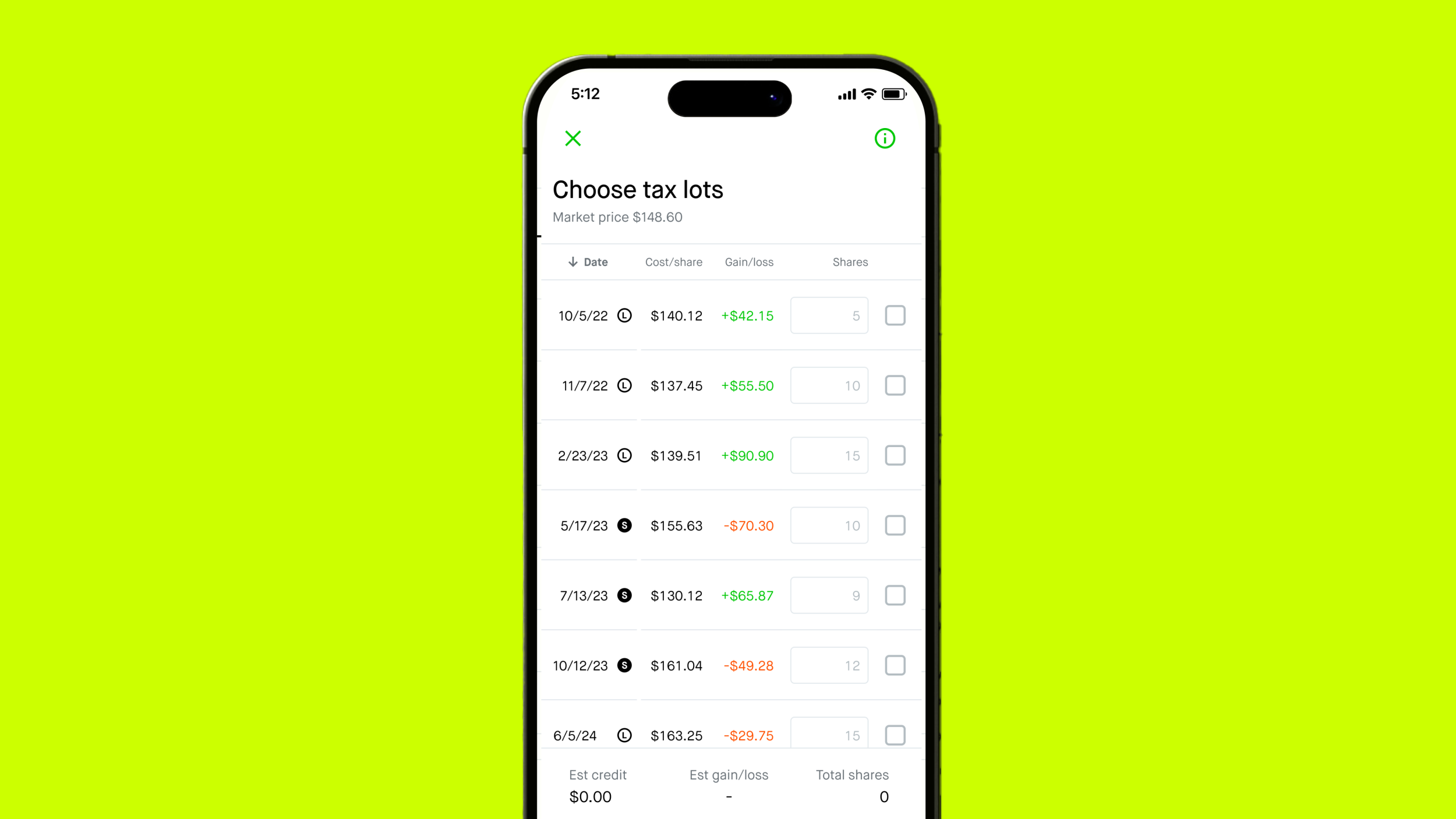
The IRS accepts several methods for tracking asset disposal, but two dominate the DeFi space: FIFO (First-In, First-Out) and Specific Identification. Your choice dictates which tokens leave your wallet first for tax purposes, directly impacting your liability.
FIFO vs. Specific Identification
FIFO is the default assumption for many tax software providers. It assumes the oldest tokens you acquired are the first ones you sell or swap. This method is simple to automate but often results in higher tax bills in a bull market, as you are selling your lowest-cost, oldest holdings first. Specific Identification allows you to select exactly which token units you are disposing of. This offers maximum control but requires rigorous record-keeping.
| Feature | FIFO (First-In, First-Out) | Specific Identification |
|---|---|---|
| Complexity | Low. Automatically assigns oldest lots. | High. Requires manual selection per transaction. |
| Tax Impact | Often higher in rising markets. | Can minimize gains by selling high-cost lots. |
| Record Keeping | Minimal. Relies on chronological order. | Strict. Must document specific lot IDs. |
| IRS Compliance | Accepted. Easier to defend in audits. | Accepted. Must prove selection at time of sale. |
How to select the right method
If you hold assets for long periods and rarely trade, FIFO is sufficient. The administrative burden is low, and the tax difference may be negligible. However, if you actively rebalance portfolios or hold multiple purchases of the same token at different prices, Specific Identification is often superior. It allows you to target specific lots for tax-loss harvesting.
To use Specific Identification, you must document the exact lot ID (timestamp, transaction hash, or acquisition date) at the moment of sale. Do not wait until tax season. Most reputable tax software supports this, but you must ensure your data import correctly tags each lot. Verify your selections against your wallet history before filing."
Handle cross-chain and LP token swaps
Liquidity provision and bridging are the highest-risk areas for DeFi tax reporting. When you deposit assets into a liquidity pool, you are not selling them; you are exchanging one form of property for another. However, withdrawing those assets later triggers a taxable event that many taxpayers miss. The IRS treats the redemption of LP tokens as the sale of the underlying assets at their fair market value at the time of redemption.
Because DeFi protocols do not issue Form 1099-DA, you must self-report every transaction. Ignorance of the tax code is not a defense against penalties, especially when blockchain data is permanently public. Follow this sequence to track your cost basis accurately across chains.
Do not record a cost basis or gain/loss when you first deposit assets into a liquidity pool. This is a non-taxable exchange of property. Record the total cost basis of the assets you deposited and the quantity of LP tokens you received. This LP token becomes the new asset holding in your portfolio.
Your cost basis for the LP token is the sum of the cost bases of the individual assets you contributed to the pool. If you deposited $1,000 of ETH and $1,000 of USDC, your LP token cost basis is $2,000. This single figure will be used to calculate your gain or loss when you eventually exit the position.
When you remove liquidity, the IRS treats this as a disposition of the LP tokens. This is a taxable event. You must calculate the fair market value of the underlying assets you received upon redemption. This redemption value is your "amount realized" for tax purposes.
Subtract the initial cost basis of the LP tokens (from Step 2) from the redemption value (from Step 3). The difference is your capital gain or loss. If you held the LP position for more than one year, this may qualify for long-term capital gains rates. If less, it is short-term. Report this on Form 8949.
DeFi protocols do not report to the IRS. All activity is visible on public blockchains. Failure to report these transactions can result in significant penalties and interest if audited.
Verify your DeFi tax lots before filing
The 2026 filing season is shaping up to be a minefield for crypto investors, with experts warning that the transition to new reporting rules will be messy Forbes. While centralized exchanges now issue Form 1099-DA, DeFi protocols do not report your activity to the IRS. This means the burden of proof rests entirely on you to reconcile your onchain history with your tax software.
Treat your cost basis calculation as a final audit. If your software’s reported gains do not match your manual records, you are flying blind. Use the steps below to catch discrepancies before you hit submit.
Compare your transaction history exported from chain explorers (like Etherscan) against the import log in your tax software. Look for missing swaps, unstakes, or liquidity pool withdrawals. If the software shows fewer transactions than your wallet history, you are underreporting income.
Ensure your software is applying the correct cost basis method (FIFO, LIFO, or Specific ID) consistently across all chains. Verify that gas fees are added to your cost basis for acquisitions and subtracted from proceeds for disposals. A common error is ignoring gas fees on low-value DeFi interactions, which skews your small gains or losses.
Double-check that the software correctly distinguishes between assets held for one year or less (taxed as ordinary income) and those held longer (qualified capital gains). Misclassifying a long-term hold as short-term can trigger a higher tax bracket unexpectedly.
Generate a draft Form 8949 from your software. Sum the total gains and losses and compare them to your final tax summary. If the numbers do not match, or if you see negative gains where you expected positive ones, trace the error back to the specific transaction ID.
-
All wallets imported?
-
Gas fees included in cost basis?
-
Staking rewards reported as income?
-
Long-term vs short-term gains separated?
-
Total gains match Form 8949?
Common DeFi Tax Questions for 2026
The repeal of broker reporting rules in April 2025 changed the landscape, but it did not eliminate your tax obligations. DeFi protocols do not issue tax forms, leaving you solely responsible for tracking cost basis and reporting gains. The IRS still has full visibility into public blockchain activity, meaning the risk of penalties for unreported DeFi income remains high.
Will crypto be tax-free in 2026?
No. Cryptocurrency transactions remain taxable events. If you hold assets for one year or less, profits are taxed as ordinary income, ranging from 10% to 37%. For assets held longer than a year, you pay long-term capital gains rates of 0%, 15%, or 20%, depending on your total taxable income. Tax-exempt thresholds apply only to specific income brackets, not to the crypto itself.
Does a DeFi wallet report to the IRS?
Unlike centralized exchanges that issue Form 1099-DA, DeFi protocols do not report your activity to the IRS. However, this lack of third-party reporting does not mean your transactions are hidden. Every swap, liquidity provision, and yield claim is permanently recorded on public blockchains. The IRS can and does use blockchain analytics to identify unreported income, so self-reporting is mandatory.
How much capital gains tax will I pay on $300,000?
The tax rate depends entirely on your total taxable income and how long you held the assets. If the $300,000 represents short-term gains added to your ordinary income, it could push you into the highest 37% bracket. If these are long-term gains, the rate is likely 15% or 20%. Use the IRS tax brackets for 2026 to calculate your exact liability based on your filing status.
No comments yet. Be the first to share your thoughts!