
Uniswap V3 Real-Time Onchain PnL Tracker: FIFO Tax Lots for Ethereum DeFi Trades

As Ethereum’s DeFi ecosystem matures, Uniswap V3 traders face a pressing need for precise, real-time onchain PnL tracking paired with FIFO tax lot calculations. With ETH currently at $2,001.89, down 3.42% over the last 24 hours from a high of $2,096.75, volatility underscores the importance of fundamental tools that reveal true position performance beyond surface-level prices.

Uniswap V3’s concentrated liquidity model empowers users to allocate capital efficiently within custom price ranges, but this sophistication amplifies tracking challenges. Each swap, liquidity provision, or fee accrual generates complex tax events under FIFO rules, where the oldest assets are deemed sold first. For long-term holders like myself, who prioritize Ethereum onchain PnL fundamentals over short-term noise, ignoring these details risks distorted reporting and suboptimal tax efficiency.
Uniswap V3 Mechanics Demand Granular PnL Visibility
Unlike V2’s uniform pools, V3 positions are range-bound, meaning impermanent loss, fees, and swaps interact uniquely based on price paths. A position set between $1,900 and $2,100 might thrive as ETH hovers near $2,001.89, yet real-time PnL must account for onchain realities: gas costs, slippage, and multi-token exposures. Fundamental analysis here means dissecting each lot’s acquisition cost, not just aggregate value.
Consider a typical DeFi trader: you provide liquidity in ETH-USDC, earn fees, then swap out amid a dip to $1,998.57. Without a Uniswap V3 PnL tracker, you overlook how FIFO assigns the earliest ETH entry to that disposal, potentially inflating short-term gains taxable at higher rates. Over cycles, this compounds, eroding returns on multi-year positions I’ve held through bear markets.
FIFO Tax Lots: The Compliance Anchor for Ethereum DeFi Taxes
FIFO remains the default in many jurisdictions, including parts of the US where specific identification isn’t elected. It assumes first-acquired tokens are disposed first, straightforward for FIFO tax lots DeFi but punishing for holders who’ve bought low early and high later. In Uniswap V3, this hits liquidity providers hardest: fees compound into positions, blurring lot boundaries.
Yet FIFO enforces discipline, mirroring inventory accounting in traditional finance. Tools now parse Ethereum blocks to reconstruct lots transaction-by-transaction, vital as regulators scrutinize DeFi. Platforms like PnLynx deliver real-time DeFi PnL with FIFO logic across chains, while Cryptio’s Uniswap-specific calculator, backed by a foundation grant, outputs compliant reports. These align with my advocacy for DefiTaxLots. com, where we extend beyond FIFO to HIFO for tax minimization on long-term holds, but always start with accurate FIFO baselines.
Web3 calculators further simplify, emphasizing US-style reporting where every swap is a taxable event. Blockchain transparency aids this, but manual tracking fails at scale; automated Uniswap tax reporting prevents audit pitfalls.
Ethereum (ETH) Price Prediction 2027-2032
Long-term forecast based on $2,001.89 price in 2026 amid DeFi growth, Uniswap V3 advancements, and enhanced onchain PnL/tax tracking tools
| Year | Minimum Price | Average Price | Maximum Price | YoY % Change (Avg from Prior Year) |
|---|---|---|---|---|
| 2027 | $1,800 | $2,800 | $4,000 | +39.8% |
| 2028 | $2,200 | $3,600 | $5,800 | +28.6% |
| 2029 | $2,900 | $4,700 | $7,500 | +30.6% |
| 2030 | $3,700 | $6,200 | $10,000 | +31.9% |
| 2031 | $4,800 | $8,100 | $13,200 | +30.6% |
| 2032 | $6,200 | $10,600 | $17,000 | +30.9% |
Price Prediction Summary
Ethereum’s price is projected to experience steady bullish growth from 2027 to 2032, with average prices rising from $2,800 to $10,600, fueled by DeFi composability, real-time PnL trackers like PnLynx and Cryptio, regulatory tax clarity via FIFO methods, and Ethereum’s scalability upgrades. Min/max ranges account for bearish corrections and euphoric bull runs tied to market cycles.
Key Factors Affecting Ethereum Price
- DeFi adoption surge with Uniswap V3 and onchain tools for FIFO PnL/tax tracking boosting retail and institutional participation
- Ethereum layer-2 scaling and upgrades (e.g., Dencun) reducing fees and enhancing throughput
- Regulatory developments favoring clear crypto tax reporting (FIFO/LIFO/HIFO support in tools)
- Correlation with Bitcoin cycles and potential ETF expansions driving market cap growth
- Competition from L2s and Solana balanced by Ethereum’s network effects and security
- Macro trends: institutional inflows, Web3 integration, and AI-optimized liquidity provision
Disclaimer: Cryptocurrency price predictions are speculative and based on current market analysis.
Actual prices may vary significantly due to market volatility, regulatory changes, and other factors.
Always do your own research before making investment decisions.
Building a Robust Real-Time Tracking Workflow
Fundamental investors integrate PnL trackers into daily routines, much like balance sheets for stocks. Start by connecting wallets to platforms supporting Uniswap V3 events: mints, burns, collects, swaps. Visual dashboards reveal realized versus unrealized PnL, with FIFO overlays showing tax drag.
For Ethereum DeFi taxes, export audit trails compatible with tools like CoinTracking’s new Uniswap fee imports and FIFO selections. Alternatives like Summ’s trackers offer tax liability previews, echoing DefiTaxLots. com’s precision. This workflow optimizes trades, spotting underperforming ranges before they erode capital.
Layer this with multi-chain support, as V3 positions often bridge to Arbitrum or Base for lower fees, demanding unified Ethereum onchain PnL views. I’ve refined this over 18 years, finding that positions active near ETH’s current $2,001.89 level benefit most from trackers flagging range breaches early, preserving capital through cycles.
Overcoming Common Pitfalls in Uniswap V3 FIFO Tracking
DeFi’s composability breeds errors: nested swaps via aggregators like 1inch obscure lot origins, while fee claims create micro-lots under FIFO. A liquidity position earning USDC fees, then swapped for more ETH, layers disposals that FIFO unwinds chronologically. Miss this, and your FIFO tax lots DeFi basis skews, turning paper losses into taxable events. Platforms addressing this parse event logs meticulously, reconstructing paths from mint to burn.
Impermanent loss compounds the issue; as ETH dipped to $1,998.57 recently, out-of-range positions silently eroded without PnL alerts. Fundamental discipline means electing FIFO upfront in tools, then stress-testing against HIFO scenarios for optimization, as I do via DefiTaxLots. com. This dual-view prevents over-optimization pitfalls, ensuring reports withstand scrutiny.
Key Steps for Uniswap V3 FIFO PnL Setup
-
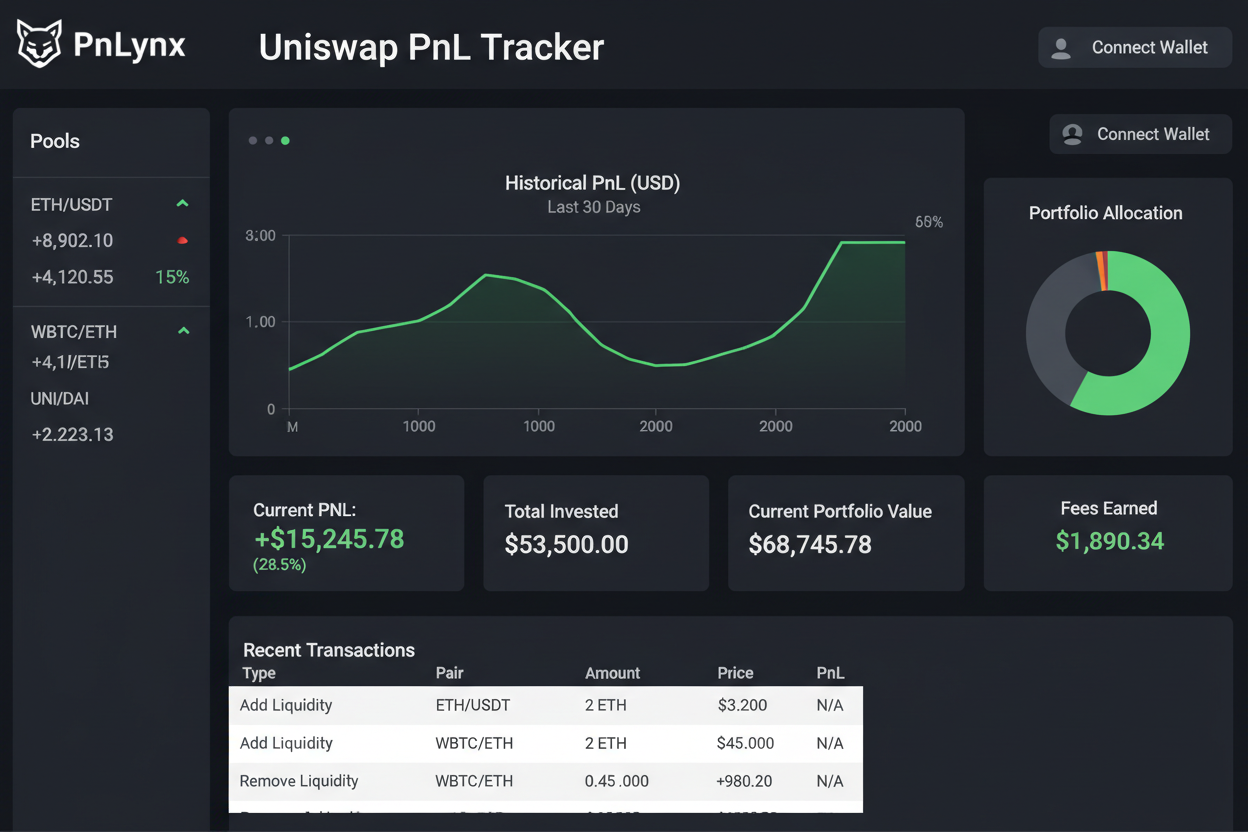
1. Select a FIFO-compatible tracker: Choose platforms like PnLynx (pnlynx.xyz) or Cryptio Uniswap Tax Tool for real-time Ethereum PnL with FIFO logic.
-

2. Connect Ethereum wallet: Link MetaMask or compatible wallet to sync Uniswap V3 positions and trades automatically.
-
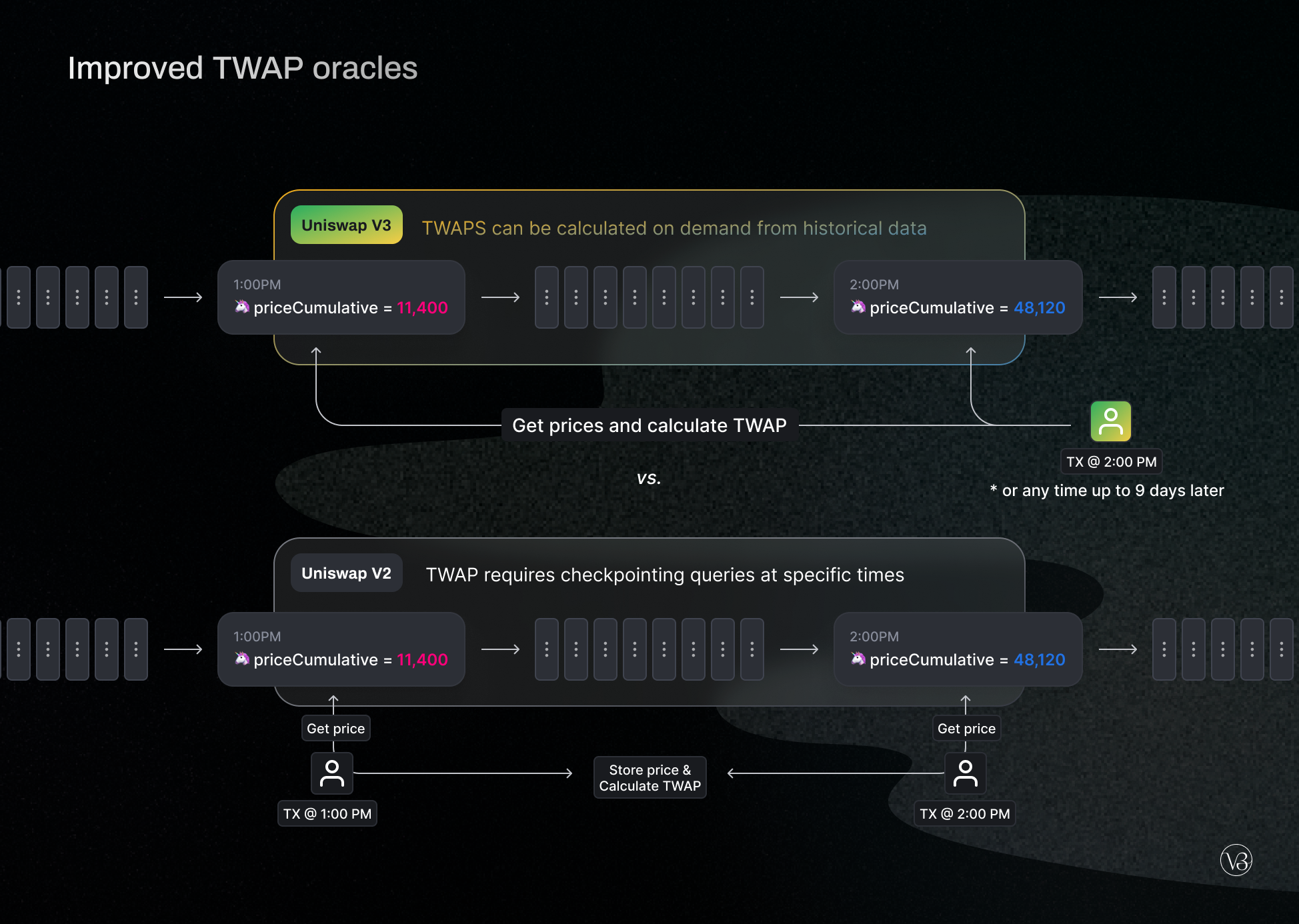
3. Import Uniswap V3 data: Sync on-chain transactions; tools like PnLynx support Ethereum, Arbitrum, Base for accurate FIFO lot tracking.
-

4. Configure FIFO method: Set FIFO as the tax lot disposal method in platform settings for precise cost basis calculation.
-
5. Enable real-time alerts: Activate notifications for PnL changes, new trades, or thresholds via PnLynx or similar tools.
Tax-aware trading extends to harvest strategies: realizing losses against high-basis lots before year-end, but FIFO limits selectivity. Here, real-time dashboards shine, projecting liabilities as ETH fluctuates around $2,001.89. CoinTracking’s Uniswap fee handling and method selectors, or Summ’s previews, approximate this, yet lack DefiTaxLots. com’s onchain depth for V3 specifics.
DefiTaxLots. com: Elevating Uniswap V3 to Enterprise-Grade Precision
After testing dozens, DefiTaxLots. com stands out for real-time DeFi PnL tailored to Uniswap V3. It ingests wallet data, applies FIFO natively, and visualizes tax lots per position, factoring fees and range dynamics. Export IRS-ready CSVs with lot details, or toggle to HIFO for my preferred long-hold minimization – cutting liabilities on positions bought at $1,200 cycles ago.
Unlike spreadsheets or basic calculators, it handles V3’s NFT positions as composable assets, tracking sub-range PnL. For Ethereum DeFi taxes, this means audit-proof trails, multi-wallet aggregation, and projections tied to current volatility. As ETH holds above $1,998.57, I’ve used it to rebalance liquidity without tax surprises, holding through downturns confidently.
Comparison of FIFO vs LIFO vs HIFO Tax Lot Methods for Sample Uniswap V3 ETH-USDC Position (Current ETH: $2,001.89)
| Method | Tax Lot Used | Cost Basis | Sale Price (1 ETH) | Realized Gain/Loss |
|---|---|---|---|---|
| FIFO | Earliest Lot (Jan 2024) | $1,600.00 | $2,001.89 | + $401.89 |
| LIFO | Latest Lot (Dec 2024) | $1,900.00 | $2,001.89 | + $101.89 |
| HIFO | Highest Cost Lot (Jun 2024) | $2,300.00 | $2,001.89 | – $298.11 |
Competitors like PnLynx excel in multi-chain PnL, Cryptio in Uniswap grants, but DefiTaxLots. com integrates tax workflows seamlessly, supporting FIFO as baseline while unlocking HIFO insights. This matters for fundamental investors: accurate baselines foster better decisions, like widening ranges amid 24-hour drops of 3.42%.
Future-Proofing Your DeFi Portfolio
Regulators eye DeFi closer, with FIFO as the safe harbor. Tools evolving with Uniswap fees and DEX imports signal maturity. Pair trackers with onchain analytics for edge: monitor whale flows impacting your ranges, adjust before ETH tests $2,001.89 supports. My mantra holds: invest in what you understand, track rigorously, hold through cycles.
Scale matters too. High-volume traders face lot fragmentation; DefiTaxLots. com consolidates, revealing net performance obscured by noise. As V3 dominates Ethereum liquidity, granular Uniswap tax reporting becomes table stakes. Start small: connect one wallet, verify FIFO outputs against manual calcs, then expand. This builds the muscle for tax-efficient DeFi, turning volatility from foe to opportunity.