
Get DeFi tax lots 2026 right
Before you run any reports, you need to establish a clear chain of custody for your assets. DeFi tax lots 2026 tracking requires more than just recording when you bought a token; you must account for the complex interactions unique to decentralized finance, such as liquidity pool deposits and staking rewards.
Start by verifying that your data source captures the full transaction history from every chain you use. Many users rely on a single wallet aggregator, but if you bridge assets or interact with cross-chain protocols, those events often appear as separate transactions. Missing a bridge transaction can break your cost basis calculation, leading to inflated gains or lost losses.
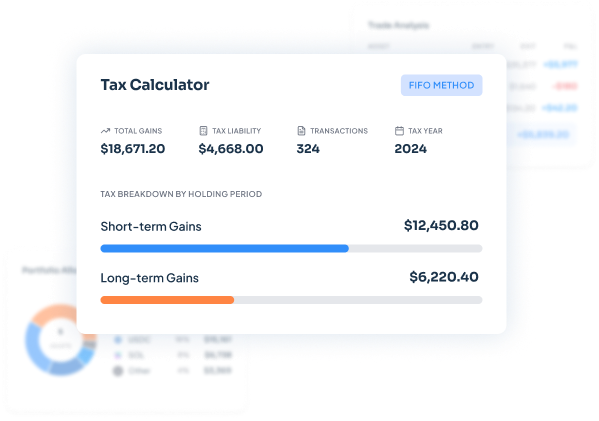
Next, decide on your accounting method. The IRS generally requires FIFO (First-In, First-Out) unless you can specifically identify the lots you sold. Specific identification is powerful for tax planning, but it demands meticulous record-keeping. If you cannot prove which specific tokens were sold, FIFO will apply automatically, potentially increasing your tax bill.
Finally, ensure your software supports the specific DeFi protocols you use. Standard exchange exports often omit on-chain events like airdrops or yield farming rewards. Without this data, your cost basis will be inaccurate, and you risk discrepancies during an audit. Gather all CSV exports and on-chain logs before proceeding to the tagging phase.
Work through the steps
Tracking cost basis across Layer 2s requires separating your data before it becomes unmanageable. DeFi transactions generate noise quickly. Liquidity pool deposits, yield farming rewards, and cross-chain bridges create thousands of records that standard wallets often fail to capture accurately. If you rely on a single exchange’s export, you will miss off-exchange activity.
Follow this sequence to build a defensible record of your DeFi activity. Each step isolates a specific risk area. Completing them in order ensures your cost basis calculations survive an IRS audit.

Identify every wallet address you used on Ethereum, Arbitrum, Optimism, Base, and other Layer 2 networks. This includes hardware wallets, software wallets, and exchange-linked addresses. The IRS treats all addresses owned by you as a single portfolio. Missing a single address creates a gap in your cost basis reporting that can trigger penalties.
Download CSV exports from every protocol you interacted with. This includes Uniswap, Aave, Lido, and any yield farming platform. Do not rely solely on block explorers like Etherscan or Arbiscan, as they often omit internal transactions or complex multi-step DeFi interactions. Protocol exports provide the metadata needed to identify rewards, fees, and liquidity positions.

Bridging assets between Layer 1 and Layer 2 is not a taxable event in itself, but it resets your cost basis tracking context. Record the exact date, time, and amount of every bridge transaction. Tag these as "non-taxable transfers" in your tax software. Failing to tag them correctly can cause your software to incorrectly calculate capital gains on the withdrawal side.

Staking rewards, liquidity provider (LP) tokens, and airdrops are taxable as ordinary income at their fair market value upon receipt. Categorize each reward type separately. LP token distributions and governance token airdrops often have complex cost basis implications. Misclassifying a reward as a capital gain instead of ordinary income is a common error that leads to underpayment penalties.
Use FIFO (First-In, First-Out) or Specific Identification methods consistently. Most DeFi traders use FIFO because it is simpler to document. Import your tagged data into a specialized crypto tax tool that supports Layer 2 networks. Run a reconciliation report to ensure your total outflows match your total inflows. Any discrepancy must be resolved before filing.
A checklist helps you verify that no transaction type was overlooked during the aggregation phase. Use this list to audit your final dataset before submission.
Mistakes That Trigger IRS Penalties
Tracking cost basis across Layer 2s requires precision. One misplaced decimal or ignored transaction type can turn a complex portfolio into an audit nightmare. The IRS does not distinguish between a simple swap on Ethereum Mainnet and a complex liquidity provision on Arbitrum; both are taxable events if mishandled.
Below are the most common errors that lead to penalties, along with the specific fixes you need to implement for the 2026 tax year.
Ignoring LP Token Basis
When you provide liquidity to a decentralized exchange, you receive LP tokens. Many traders mistakenly treat these as a non-taxable receipt. In reality, depositing assets into a pool is often a disposal of those assets, triggering a capital gains event on the original cost basis.
The Fix: Track the cost basis of the underlying assets at the moment of deposit. When you later redeem the LP tokens, calculate the gain or loss based on the difference between the redemption value and the original deposit basis. Do not assume the basis carries over unchanged.
Mixing Up Staking Rewards and Airdrops
Staking rewards and airdrops are both "income" at fair market value when received, but they are treated differently when sold. Staking rewards are ordinary income. Airdrops may be considered property received for no cost, establishing a zero or low basis depending on specific IRS guidance and timing.
The Fix: Log the exact USD value of every reward or airdrop at the second of receipt. This becomes your cost basis for future sales. Failing to record this initial value means your entire proceeds from selling these tokens will be taxed as capital gains, potentially at a higher rate than necessary.
Failing to Reconcile Bridge Transactions
Bridging assets from one L2 to another is not a taxable event, but it is a critical tracking event. If your tax software does not properly tag bridge deposits and withdrawals as "non-taxable transfers," it will incorrectly flag them as sales. This creates phantom income and inflates your tax liability.
The Fix: Use a tax tool that supports L2 bridge reconciliation. Ensure that every outgoing transaction on the source chain matches an incoming transaction on the destination chain. Mark these pairs as "transfer" or "non-taxable" to keep your cost basis accurate across networks.
Defi tax lots 2026: common: what to check next
The 2026 filing season introduces significant complexity with the new IRS Form 1099-DA. This form changes how brokers and exchanges report transactions, creating a new baseline for cost basis tracking across Layer 2s and decentralized finance.
Does the new Form 1099-DA cover all DeFi transactions?
No. The new Form 1099-DA primarily targets centralized exchanges and regulated brokers. It does not automatically capture on-chain activity from decentralized exchanges (DEXs), liquidity pools, or non-custodial wallets. You remain responsible for tracking and reporting these off-exchange transactions, which often require manual entry or specialized software to reconcile with the 1099-DA data.
How are airdrops and staking rewards taxed in 2026?
Airdrops and governance tokens received in your wallet are taxable as ordinary income at their fair market value on the day of receipt. Staking rewards are generally treated similarly as income. Many investors overlook these because they didn't actively trade for them, but the IRS views them as taxable events. Failure to report free tokens is a common audit trigger.
Can I use FIFO for DeFi tax lots across multiple chains?
Yes, First-In, First-Out (FIFO) is an acceptable IRS method for DeFi tax lots. However, consistency is critical. If you use FIFO for Ethereum transactions, you must apply the same method to Polygon or Arbitrum lots unless you have a specific reason to switch and can document the change. Mixing methods without proper identification of specific lots can lead to IRS penalties and inaccurate cost basis calculations.
What happens if I lose my transaction history?
Losing data is risky but not always fatal. You can reconstruct history using blockchain explorers like Etherscan or Arbiscan, though this is time-consuming. The IRS may also accept reasonable estimates based on bank statements or exchange records if you can demonstrate good faith efforts to recover data. Document every attempt to retrieve your history to protect yourself during an audit.
No comments yet. Be the first to share your thoughts!